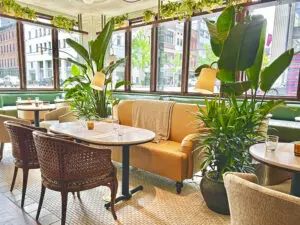
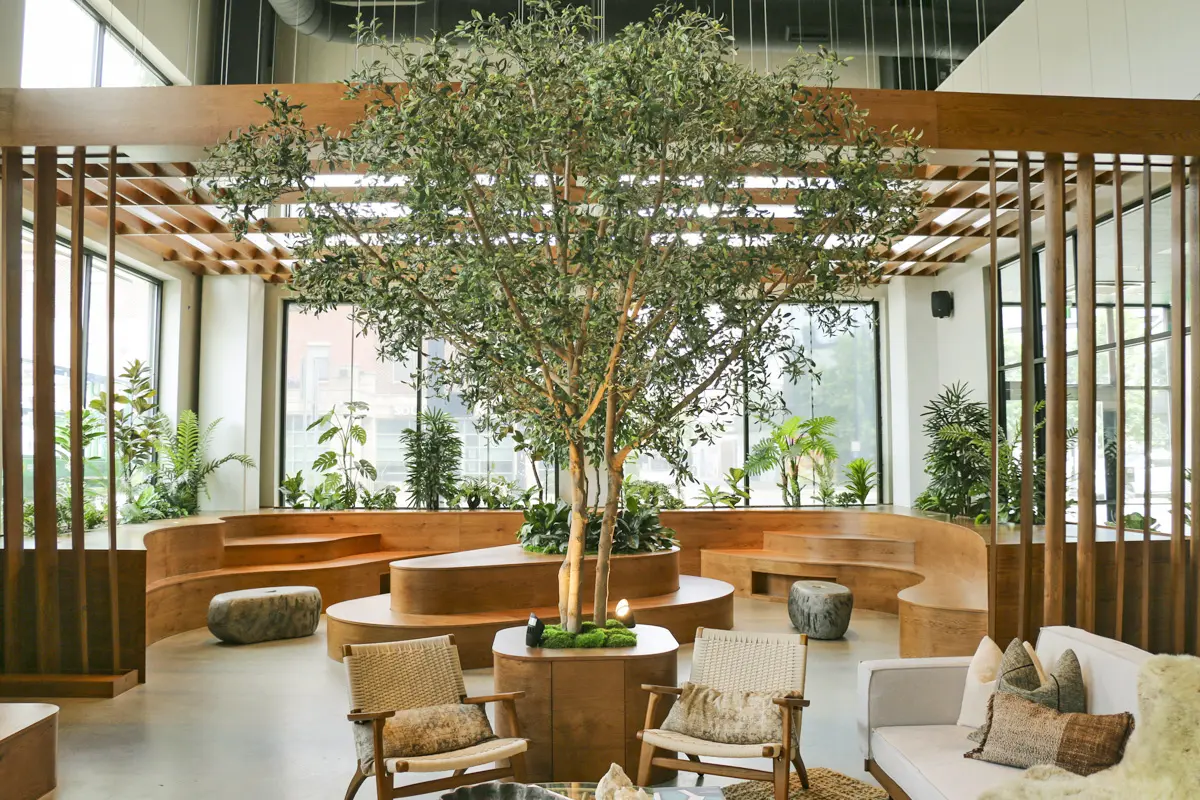
If you’ve walked through a lobby lately and noticed a wall of living plants instead of a landscape print, you’ve seen biophilic design at work. It’s the practice of intentionally bringing real nature into a building on purpose, instead of treating greenery as a filler. This can include plants, moss, living walls, and natural light. The timing isn’t a coincidence, either. Gensler’s 2026 Global Workplace Survey asked over 16,000 office workers what they actually want from their workplace, and access to nature is near the top of the list. As more companies ask people to return to the office, the buildings that give them a reason to want to are investing in biophilic design.
That expectation is now shaping offices across Columbus. If you’re ready to talk through what this could look like in your space, book a biophilic design consultation with us at 844-796-5480 or request a proposal through our contact page.
What’s Included in Biophilic Design Services
“Plants” undersells it. A real biophilic design plan usually pulls together several pieces, each doing a different job:
- Interior plant design and installation for open floors and workstations
- Living plant walls for lobbies, escalator bays, or anywhere you want people to stop and take a photo
- Preserved moss art for corridors and conference rooms where the light is too low to keep anything alive
- Exterior planters and entryway displays that tell people something about the building before they even walk in
- Material selections: containers or accent pieces in natural materials like wood, stone, terracotta, etc.
- Scheduled plant maintenance so none of the above becomes someone’s problem down the line
The reason we plan these components together comes back to the word itself. Biophilic comes from biophilia, or our intrinsic pull toward living things. Done well, this isn’t decorating around the architecture. Light, sightlines, materials, and plant placement are planned together, so the greenery becomes part of the building rather than something added on later. That’s also why we like to get horticulturists involved early. They can sit at the table with architects, interior designers, and specifiers while irrigation, lighting, and layout are still being decided.
In the end, it’s all worth the coordination—and the research backs it up. A 2024 review in Intelligent Buildings International looked across 74 peer-reviewed studies and found consistent psychological, physiological, and cognitive benefits for people working in biophilic spaces. This isn’t just a nice-to-have statistic. It shows up in how people feel and function.
Why Columbus Employers Are Investing in This Now
The short version: plants give people a reason to come back, helps them focus once they’re there, and gives visitors something to remember about the building. As return-to-office policies have tightened, indoor greenery has become one of the clearest ways a company can show that its space was built with people in mind.
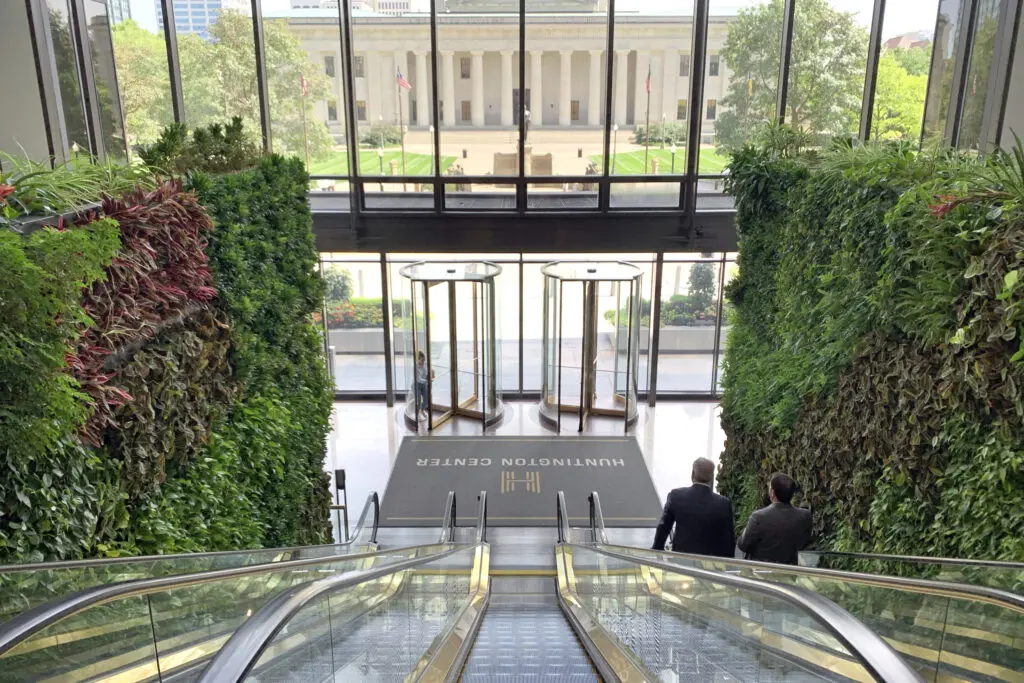
We don’t have to make that case in the abstract—we can point to it. At The Huntington Center on South High Street, we rehabilitated and now maintain a 2,400-square-foot living wall. It contains 8,500 individual plants. The project won a Gold Award at the International Plantscape Awards. It also turned what was once a plain escalator bay into a spot that people in downtown Columbus actually recognize.
About 80% of our installations are commercial work, and we’ve watched the pattern shift over the past few years: greenery is moving out of the lobby and onto the floors where people actually sit—planter groupings between desks, green walls next to collaboration spaces, that kind of thing. The same logic holds outside the office. Our designs in hospitality and healthcare environments play a significant role in guest and visitor experiences. Guests, patients, and employees all respond positively to the same thing: a room that feels alive.
What Makes Oakland Green Interiors Different
We’re not a plant company that showed up recently. Oakland Green Interiors pairs more than 40 years of interiorscape experience with the buying power of Oakland Nursery. Our family-run parent company has been part of Ohio’s green industry for over 80 years. That relationship gives us access to a wider range of quality plant material at better prices, backed by in-house expertise in landscape design and irrigation.

It’s a Columbus story through and through. We started in the early 1980s as Oakland Interiorscapes, craning palm trees into the grand corporate atriums being built at the time. In 1992, our team planted the new plant rooms in the award-winning addition to the Franklin Park Conservatory. Today, the firm is woman-operated and directed by Genevieve Reiner Mills, a third-generation family operator. Our team is made of skilled designers, horticulturalists, and installers.