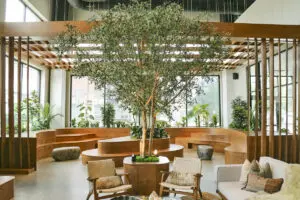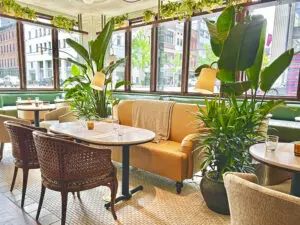
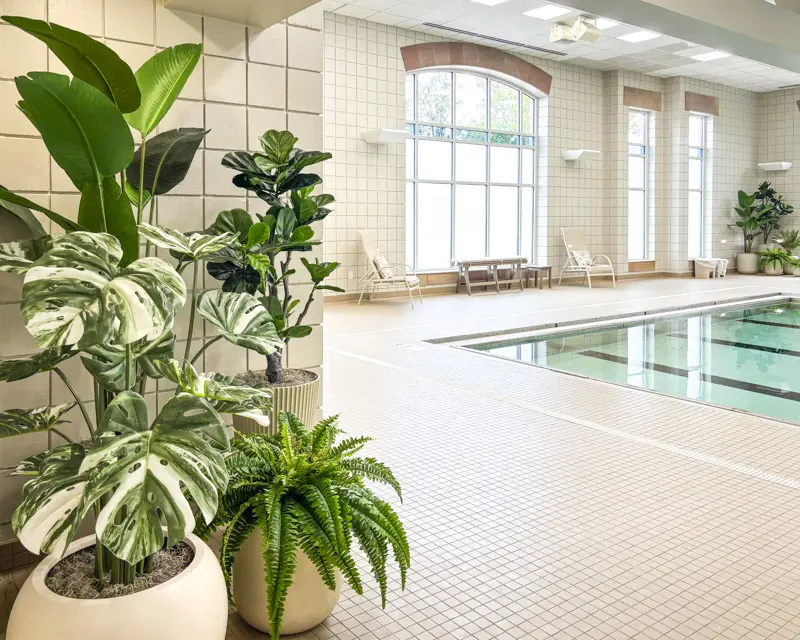
It’s time to bring living design into your workplace—how do you do that in a way that is intentional and tells a story? A successful project takes more than choosing a few plants and finding somewhere to put them. Timing, lighting, water access, space, budget, and long-term maintenance all shape what is possible. The earlier a biophilic design team is involved, the more opportunities there are to build those considerations into the space from the start.
But that doesn’t mean you missed your chance if the building is already finished. Biophilic design can be integrated into existing workplaces, too. In this guide, we’ll walk through when to bring in a biophilic design team, what the process looks like, and the questions to consider before a project gets underway.
When Should You Bring In a Biophilic Design Team?
As early as you possibly can! Living plant systems depend on light, water, and space, and those are exactly the things a building locks in early, during planning and construction. Bring us in during design, and we’re specifying fixtures and watering systems with plant health and long term success in mind from day one. Bring us in after move-in, and we’re working within whatever light and plumbing the building already has.
Neither path is wrong, to be clear. Early coordination buys you range and efficiency. A retrofit buys you speed and a contained budget, and it works well: many current spaces see us incorporating nature after the fact. Here’s how the two compare on the decisions that actually matter:
| Decision Point | Integrated at Planning Stage | Added After Move-In |
|---|---|---|
| Lighting | Fixtures specified with plant health in mind from day one. Getting plants the right light spectrum ensures a successful investment. | Plant palette limited to existing light, or supplemental lighting added |
| Water Access | Irrigation and drainage roughed in where displays will live | Hand watering on scheduled visits; large walls may need retrofit plumbing |
| Plant Selection | Widest palette, including statement trees and full living walls | Proven low-light and container species carry the design |
| Budget | Green scope sits inside the fit-out, with fewer change orders | Standalone project cost; phased installs spread the spend |
| Disruption | Installation happens before occupancy | Work scheduled around business hours |
| Long-Term Health | Building systems match the plants they hold | Success depends on smart placement and a disciplined care schedule |
The one mistake that costs you either way is skipping the site assessment. A plant palette chosen without actual light readings fails no matter when it goes in.
How the Process Actually Works
Four steps, start to finish:
- Consultation. We walk the space with you and look at light levels, layout, water access, and how your teams actually use the room.
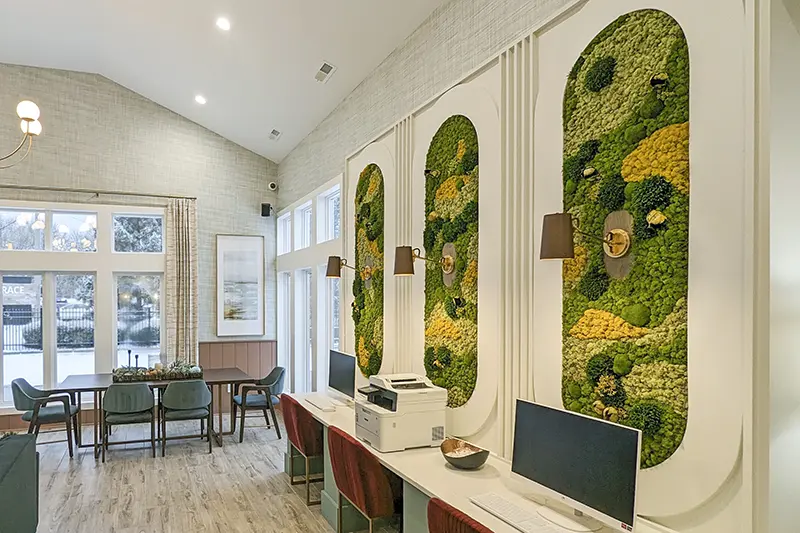
- Design. We put together a plant palette, container styling, and placement plan built around your brand and your building’s real conditions—statement trees for an atrium, preserved moss panels for a windowless hallway, whatever the space calls for.
- Installation. Scheduled around your operations, not the other way around.
- Care. Ongoing maintenance visits keep everything healthy long after installation day.
If you want to run early numbers before committing to anything, our plant ROI calculator is a good starting point. And if you’re an architect or interior designer, pull us into the drawings early—we’ll make sure that your design vision can be applied to the practical aspects of living plants.
Questions We Get Asked Before Booking
How long does a commercial installation take?
It scales with scope. Freestanding planters and preserved moss features are usually installed in a single visit once the design is approved. Living plant walls take longer, since we need to check structure, water access, and light before build-out, and we coordinate that phased schedule with your facilities team.
How much does workplace biophilic design cost?
It depends on scale, species, and systems involved. Desktop planters, floor containers, and preserved moss art sit at the lower end of the cost spectrum, while large plant walls and complex built in planting displays can be their own capital expense. Every project is custom.
Does this work in offices with little natural light?
Yes. There are plants that hold up fine under standard office lighting, and preserved moss art needs no light at all—the moss isn’t growing anymore, so it doesn’t need sunlight. We survey your actual light levels before landing on a plant palette, not after.
Who takes care of the plants once they’re in?
Our horticulture technicians do, on a scheduled route—watering, feeding, pruning, pest monitoring, cleaning, all of it. If a plant declines, we swap it out rather than let your visitors watch it struggle. Your staff should never inherit plant care; that’s the whole point of hiring us.
Can we add this to a leased space without renovating?
Yes, in most cases. Freestanding planters, container groupings, desktop plants, and wall-hung preserved moss art all go in without any structural changes, so a standard lease won’t block them. Larger living walls need landlord sign-off for water and mounting, which is exactly why we run a site survey before finalizing any design in a leased building.
Getting Started
At Oakland Green Interiors, we start by hearing about your space, your light, and what you’re trying to accomplish—then we take it from there—from the first site survey through the weekly care visit. Contact us to get started today!